.png)

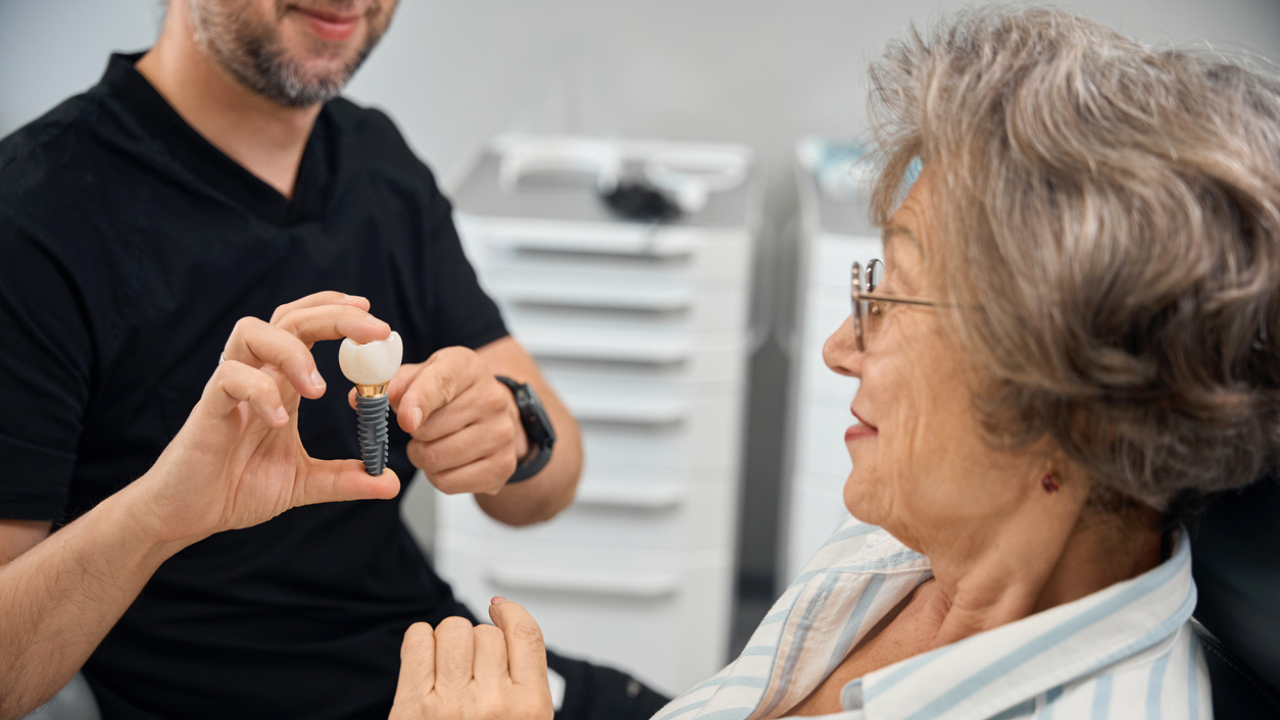
A dental implant replaces a missing tooth in three parts: a titanium post that takes the place of the root, an abutment that connects to the post, and a crown that looks and functions like a tooth. The titanium post is placed in the jawbone and, over a few months, the bone grows around it through a process called osseointegration. Once that bond is formed, the implant is as stable as a natural tooth root.
Learn about dental implants at our Centennial dental office → /implants
The Three Parts
• Implant body (the post). A small titanium screw, usually 8–14 mm long, placed where the root used to be.
• Abutment. A connector that attaches to the top of the implant after healing and sticks up just above the gum.
• Crown. The visible part — custom-made to match the shape and color of your other teeth.
Titanium is used because the human body tolerates it well and bone bonds directly to its surface. That bone-to-metal bond is the whole reason implants work the way they do.
Step-by-Step: What the Process Looks Like
1. Consultation and 3D imaging. A cone-beam CT scan shows the bone, the nerve location, and the sinus position. This is how we plan the implant precisely.
2. Any prep work needed. If a damaged tooth still needs to come out, or if there isn't enough bone, those steps happen first. Bone grafting is common and adds healing time.
3. Implant placement. A short surgery under local anesthesia. The post is placed into the bone and the gum is closed over it (or a small healing cap is left exposed).
4. Osseointegration. The bone heals around the implant over roughly 3–6 months. During this time, you may wear a temporary tooth so the gap isn't visible.
5. Abutment placement. Once the bone has bonded, a small connector is attached. The gum is shaped around it.
6. Final crown. After impressions or digital scans, a custom crown is made and attached to the abutment. The result looks and works like a tooth.
Start to finish, a typical case runs about 4–9 months, with most of that time being healing rather than chair time.
Why Bone Health Matters
Implants need bone to integrate with. When a tooth is missing, the bone in that area starts to shrink —research shows roughly 25% of width can be lost in the first year. That's one of the reasons we encourage replacing missing teeth sooner rather than later. If bone has already been lost, grafting can rebuild enough volume to support an implant.
Success Rates and Longevity
Implants are one of the most successful procedures in modern dentistry. Published 10-year success rates run roughly 94–97% in healthy adults. With good oral hygiene and regular cleanings, implants frequently last decades. The crown on top may need replacement after 10–15 years (it sees more wear), but the implant itself often outlasts the rest of a person's dental work.
What Makes an Implant Fail
• Heavy smoking — significantly reduces success rates.
• Uncontrolled diabetes — slows healing and raises infection risk.
• Untreated gum disease — bacteria can attack the bone around the implant.
• Poor home care after placement — same risk as for natural teeth.
• Heavy clenching or grinding without a night guard —repeated overload.
FAQ
Does it hurt?
Most patients describe the placement itself as much less uncomfortable than they expected. Local anesthesia handles the procedure. Mild soreness for a few days afterward is normal and usually managed with ibuprofen.
Will it feel like my real tooth?
In most ways, yes — for chewing and appearance. Implants don't have the same nerve sensation as a natural tooth, but most patients stop noticing the difference within a few weeks.
How do I take care of it?
Brush and floss like a natural tooth. Keep up with regular cleanings — the gum around an implant needs as much attention as the gum around a tooth.
Considering an Implant? Let's Look at the Bone First.
Call (303) 790-9323 to schedule a consultation with one of our expert implant dentists.
About the Authors
Drs. Bart & James Christiansen, DDS are brothers practicing in Centennial, CO. Bart has been practicing since 1988 and James since 2009. They offer general, restorative, cosmetic, and emergency dentistry for the whole family.


